
Published: Aug 11, 2026 | Category: Clinical Insight
Video-Assisted Thoracoscopic Surgery (VATS) has transformed thoracic procedures over the past two decades, offering reduced trauma, shorter hospital stays, and faster recovery compared to open thoracotomy. However, surgeons worldwide still face persistent challenges — from instrument access limitations and inadequate visualization to post-operative drainage complications. This article examines the most critical pain points in current VATS practice and outlines the integrated consumable solutions that are reshaping thoracic surgical outcomes.
The VATS Landscape: Growth and Gaps
Global VATS procedure volume is projected to grow at a CAGR of 7.2% through 2030, driven by aging populations, rising lung cancer incidence, and expanding adoption in emerging markets. Yet despite this growth, fundamental challenges remain unresolved in many operating rooms:
Key Statistics:
- Approximately 15-20% of planned VATS procedures convert to open thoracotomy due to intraoperative difficulty
- Post-operative air leak remains the most common complication, affecting 8-30% of VATS lobectomy patients
- Chest tube-related pain is reported by 60-75% of patients as the most significant post-operative discomfort
- Instrument triangulation limitations restrict surgeon dexterity in 40% of single-port VATS cases
Five Critical Challenges in Current VATS Practice
1. Instrument Access and Triangulation
Unlike open surgery, VATS requires working through 2-4 small intercostal ports. Instrument crowding and limited triangulation angles create a "chopstick effect" where instruments compete for the same working space. This is particularly acute in single-port VATS, where all instruments and the thoracoscope pass through a single incision.
Impact: Prolonged operative time, increased surgeon fatigue, and higher risk of instrument collision causing tissue trauma.
2. Inadequate Visualization and Lighting
While modern thoracoscopes offer HD and 3D imaging, deep thoracic cavities with limited access points create blind spots. Bleeding or adipose tissue can rapidly obscure the surgical field, requiring frequent scope cleaning and repositioning — each interruption adding 2-5 minutes to the procedure.
Impact: Interrupted surgical flow, extended anesthesia time, and potential for missed pathology at the resection margin.
3. Post-Operative Chest Drainage Complications
Chest tube insertion and management remain among the most problematic aspects of VATS recovery. Traditional large-bore chest tubes (28-32Fr) cause significant pain, while smaller tubes may fail to adequately evacuate air and fluid. Improper placement, kinking, and blockage are reported in up to 25% of cases.
Impact: Prolonged chest tube duration, delayed ambulation, increased risk of pleural infection, and extended hospital stay (averaging 2.1 additional days).
4. Trocar-Related Complications
Trocar insertion through the intercostal space carries risks including intercostal nerve injury, vascular damage, and post-operative neuralgia. Rigid trocars without protective sleeves can cause tissue shearing during instrument exchange. The incidence of chronic post-VATS pain related to trocar sites is estimated at 5-12%.
Impact: Chronic pain syndromes requiring long-term analgesia, reduced patient satisfaction, and potential medicolegal exposure.
5. Supply Chain Fragmentation
VATS procedures require consumables from multiple categories — trocars, endoscopic instruments, chest drainage systems, tissue sealants, and specialized wound dressings. Sourcing from different manufacturers creates compatibility issues, inconsistent quality, and complex inventory management. Hospitals report spending an average of 12-18% more on VATS consumables when using fragmented supply chains versus integrated sourcing.
Impact: Higher procurement costs, inventory waste, and clinical inconsistency across procedures.
Modern Solutions: An Integrated Approach
Optimized Trocar Systems
Modern thoracic trocars now feature blunt-tip obturators with graduated dilation, reducing intercostal nerve trauma by 40-60% compared to traditional cutting-tip designs. Transparent cannulas with side-port insufflation enable continuous visualization during insertion. Flexible silicone sealing caps accommodate instruments from 5mm to 12mm without air leak — a critical feature for maintaining pneumothorax during complex procedures.
Advanced Chest Drainage Technology
Next-generation chest drainage systems address multiple pain points simultaneously. Silicone-coated thoracic catheters with multi-side-hole configurations provide superior drainage while reducing tissue adhesion. Digital drainage units with real-time air leak monitoring enable objective removal criteria, reducing chest tube duration by an average of 1.5 days. Integrated collection chambers with bacterial filters and one-way valves minimize infection risk and eliminate the need for water-seal maintenance.
Single-Use Procedure Kits
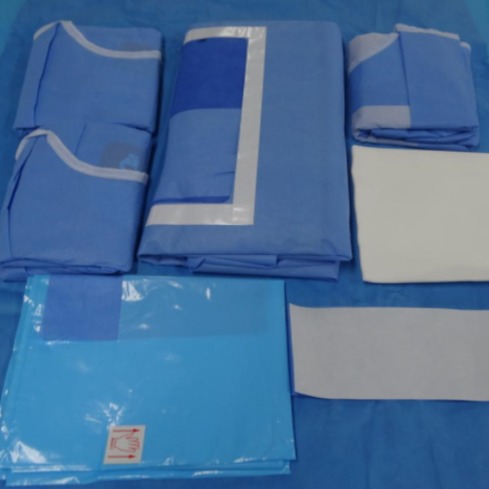
Pre-assembled VATS procedure kits — combining trocars, chest drainage sets, wound dressings, and specialized drapes in a single sterile package — are gaining rapid adoption. Hospitals using integrated OEM procedure packs report:
- 30% reduction in OR setup time
- 25% decrease in consumable waste
- 18% lower per-procedure consumable cost
- Elimination of intraoperative "missing item" delays
Hybrid Instrumentation
Articulating endoscopic instruments with 7-degree-of-freedom wristed tips are overcoming traditional triangulation limitations. Combined with 3D/4K thoracoscopic systems, these instruments enable the surgeon to operate with near-open-surgery dexterity through ports as small as 8mm. The learning curve for VATS lobectomy has been reduced by approximately 35% with these next-generation instrument platforms.
FAQ
What is the most common reason for VATS-to-open conversion?
Intraoperative bleeding and dense pleural adhesions are the two leading causes, accounting for approximately 60% of conversions. Proper pre-operative imaging, careful patient selection, and access to advanced hemostatic agents can reduce conversion rates significantly.
How long should a chest tube remain after VATS lobectomy?
Current evidence supports removal when air leak is absent for 6-12 hours and daily drainage is below 250-300mL. Digital drainage systems have enabled protocol-driven removal, reducing average duration from 4-5 days to 2-3 days compared to traditional water-seal systems.
Are single-port and multi-port VATS outcomes comparable?
Meta-analyses indicate comparable oncologic outcomes between single-port and multi-port VATS for early-stage lung cancer. Single-port approaches may offer modest advantages in post-operative pain and length of stay, but require greater surgeon experience and specialized instrumentation.
Can OEM procedure kits match the quality of individually sourced components?
When sourced from ISO 13485 and CE MDR certified manufacturers, OEM kits deliver equivalent or superior quality to individually sourced components. The key advantage lies in supply chain integration — all components are tested for compatibility, sterilized as a complete set, and delivered with unified documentation for regulatory compliance.
Looking Ahead
The next five years will see VATS evolve toward fully integrated procedural solutions — where instrumentation, imaging, drainage, and wound management are designed as a unified system rather than assembled from disparate components. Robotic-assisted VATS platforms, AI-powered surgical navigation, and biodegradable chest drainage materials are on the near horizon. For thoracic surgical teams, the question is no longer whether to adopt minimally invasive approaches, but how to optimize every element of the consumable supply chain for consistent, predictable outcomes.
Explore More — WeHereMedSolution.com
Thoracic Surgery Solutions →Chest drainage systems, trocars and minimally-invasive surgery consumables.
Related News

Nitrile Glove Costs Rose 31% in 2026: How Buyers Should Read the New Supply Chain Math
If you buy exam gloves, wound dressings or any other single-use medical consumables for a hospital, a care home or a distributor, the cost line in you...

Hospital at Home Is Scaling: A New Playbook for Medical Consumables
Hospital-at-home is moving from pilot to policy: the U.S. extended its Acute Hospital Care at Home waiver through 2030, and the hospital-at-home equip...
EU PPWR Compliance for Medical Device Packaging: Top Questions Answered
The EU Packaging and Packaging Waste Regulation (PPWR), Regulation (EU) 2025/40 , entered into force on 12 August 2026 . Many medical device manufactu...